
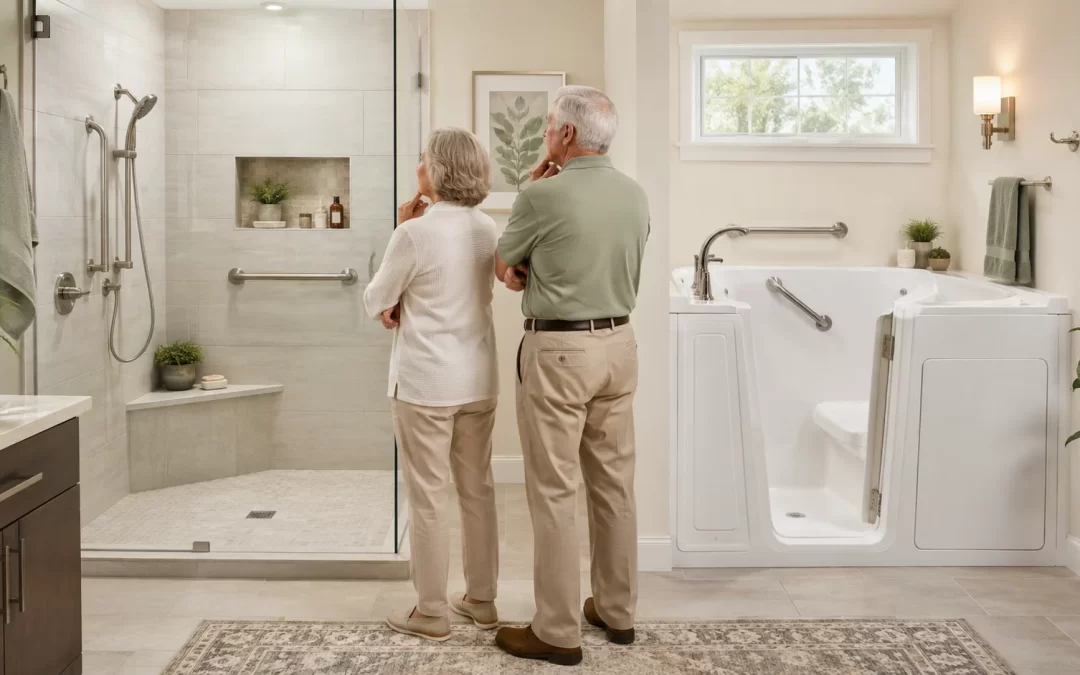
For aging at home, a walk-in shower is usually better if standing is still comfortable and you want easy, fast access with less waiting time and simpler cleaning. A walk-in tub is often better if sitting to bathe is safer, you enjoy soaking, or you have joint pain that makes stepping over a high tub wall difficult. Many homes benefit from a combination: a main walk-in shower plus a walk-in tub in the primary or secondary bathroom. The best choice depends on mobility, bathroom layout, budget, and how long you plan to stay in the home.
This guide walks through the real tradeoffs between walk-in showers and walk-in tubs so you can choose what truly fits your needs, or those of a parent or loved one. It’s written for homeowners, seniors, and caregivers who want safer, more comfortable bathing without pressure or scare tactics. By the end, you’ll understand the pros, cons, costs, and next steps to take before you talk to any installer.
Table of Contents
- Walk-In Shower vs. Walk-In Tub: The Big Picture
- Safety and Accessibility: Which Is Safer for Aging in Place?
- Comfort, Routine, and Dignity While Bathing
- Costs, Installation, and Timelines
- When a Walk-In Tub Is Usually the Better Choice
- When a Walk-In Shower Is Usually the Better Choice
- Alternatives and Add-Ons to Improve Bathroom Safety
- Key Numbers: Typical Costs, Features, and Installation Times
- How to Decide What’s Right for Your Home and Family
- Frequently Asked Questions
- Summary: Key Takeaways
- What to Do Before You Get a Quote
Walk-In Shower vs. Walk-In Tub: The Big Picture
What each option is, in simple terms
Walk-in shower: A shower with a low or zero threshold that you can step or roll into without climbing over a high tub wall. It usually has:
- A wide opening or no door
- Non-slip flooring
- Grab bars and a handheld shower (if set up for accessibility)
- Optional built-in or fold-down seat
Walk-in tub: A bathtub with a door in the side and a built-in seat so you can walk in over a low step, close the door, and sit while the tub fills. It usually has:
- Low step-in threshold
- Built-in seat and grab bars
- Handheld shower wand
- Optional hydrotherapy or air jets, heated seat, and quick-drain systems
Why this matters for aging at home
Most bathroom falls happen when stepping over high tub walls, turning, or reaching on wet surfaces. Both walk-in showers and walk-in tubs are designed to reduce those risky movements by lowering the step-in height and adding support where it’s needed. Choosing the right option can help you or a loved one bathe more comfortably, with less assistance, and stay in the home longer.
The “better” choice is not the same for everyone. It depends on:
- Whether standing for 10–15 minutes is comfortable and safe
- Whether sitting and soaking is important for comfort or pain relief
- How much help a person already needs with bathing
- Bathroom size, plumbing, and budget
- How long you plan to stay in the home
Key tradeoffs at a glance
- Walk-in shower strengths: Faster in and out, easier to clean, often better for wheelchairs and walkers, and generally more appealing for resale.
- Walk-in tub strengths: Seated bathing, warm soaking, potential relief for stiff joints and muscles, and a more private, “bath-like” experience.
- Main tradeoffs: Walk-in tubs take longer per bath (filling and draining) and usually cost more than a basic walk-in shower conversion. Walk-in showers may still require some standing balance unless you add a seat and handheld shower.
Safety and Accessibility: Which Is Safer for Aging in Place?
How walk-in showers support safety
A well-designed walk-in shower can be very safe for someone who can still stand and pivot with support. Safety features often include:
- Low or zero threshold (often 0–3 inches)
- Non-slip flooring
- Grab bars at the entrance and inside the shower
- Handheld shower with easy-to-reach controls
- Built-in or fold-down shower seat
For wheelchair users or those using walkers, a curbless (zero-threshold) shower can allow rolling directly into the shower area. This can reduce risky transfers, especially when combined with a sturdy seat and grab bars.
How walk-in tubs support safety
Walk-in tubs are designed around seated bathing. Safety features often include:
- Low step-in (often around 3–7 inches, depending on model)
- Built-in, chair-height seat
- Grab bars and textured, non-slip floor
- Easy-to-reach faucet and controls
- Handheld shower wand for rinsing while seated
For people who feel unsteady standing, a walk-in tub can reduce the need to stand, turn, or bend while bathing. However, the person still needs enough balance and leg strength to step over the low threshold and sit down safely.
Important safety limitations and caveats
- Neither option can guarantee fall prevention. Falls can still happen, especially if someone rushes, is dizzy, or has severe balance issues.
- Walk-in tubs require you to enter, close the door, and then wait while the tub fills and drains. This means sitting for several minutes before and after bathing, which may be uncomfortable for some people.
- Walk-in showers may still require standing unless you add a seat and handheld shower, which are strongly recommended for many older adults.
If you’re unsure which is safer for your specific situation, it can help to talk with an occupational therapist or physical therapist. They can evaluate balance, strength, and transfer ability and suggest the safest setup.
Comfort, Routine, and Dignity While Bathing
Comfort in a walk-in shower
Walk-in showers are usually best for people who:
- Prefer quick showers over long baths
- Can stand with or without a grab bar for 5–15 minutes
- Want a space that’s easy to enter, exit, and clean
Adding a shower seat and handheld shower can make it easier to:
- Sit while washing legs and feet
- Have a caregiver assist from outside the spray area
- Reduce fatigue for people with heart, lung, or stamina issues (always under medical guidance)
Comfort in a walk-in tub
Walk-in tubs are usually preferred by people who:
- Find warm soaking very soothing for stiff joints or muscles
- Have difficulty standing for more than a few minutes
- Want a more private, spa-like experience while seated
Many walk-in tubs offer:
- Hydrotherapy (water) or air jets for massage-like effects
- Heated seats and backrests
- Neck and head support with cushions or contoured backs
These features can make bathing feel less like a chore and more like a comfort routine. However, jets and heaters add to the cost and may require additional electrical work.
Dignity and independence considerations
For many older adults, being able to bathe with less hands-on help is about dignity as much as safety. Both walk-in showers and walk-in tubs can support more independence when set up correctly.
- Walk-in shower: Often easier for a caregiver to assist from outside the shower, which can feel less intrusive.
- Walk-in tub: Allows seated bathing behind a closed door, which can feel more private, but may require more hands-on help for transfers if mobility is limited.
Think about who will be helping, how much help is realistic, and what will feel most respectful and comfortable for the person bathing.
Costs, Installation, and Timelines
Typical cost ranges
Costs vary widely based on location, bathroom condition, and product choices, but these ranges are common in the U.S.:
- Walk-in tub (tub only): About $3,000–$10,000+ depending on size, brand, and features.
- Walk-in tub installed: Often around $5,000–$20,000+ including labor, plumbing, electrical work, and any needed bathroom modifications.
- Walk-in shower conversion: Basic tub-to-shower conversions can start around $3,000–$8,000+, but full custom tile showers or major remodels can cost $10,000–$20,000+.
Basic soaker walk-in tubs (no jets) are usually less expensive than hydrotherapy or luxury models. Similarly, a simple acrylic shower system is usually less costly than a fully tiled, custom walk-in shower.
Installation timelines
In straightforward projects:
- Walk-in tub installation: Often 1–3 days, especially if the new tub fits the existing space and plumbing is in good condition.
- Walk-in shower conversion: Often 1–3 days for a basic system; more complex remodels with tile, wall changes, or plumbing moves can take a week or more.
More time may be needed if:
- Walls or floors need repair
- Plumbing or electrical lines must be moved or upgraded
- The bathroom layout is being significantly changed
For a deeper look at what happens during a walk-in tub project, you may find it helpful to read about what to expect before, during, and after walk-in tub installation.
What affects cost the most
- Product type and features: Hydrotherapy jets, air jets, heated seats, quick-drain systems, and wider doors all add cost.
- Bathroom size and layout: Tight spaces, small doors, or unusual layouts can require more labor.
- Condition of plumbing and electrical: Older homes may need upgrades to handle new fixtures or electrical loads.
- Finishes and materials: Tile, stone, and custom glass cost more than basic acrylic or fiberglass systems.
- Local labor rates: Costs vary by region and by contractor experience.
Because of these variables, it’s important to get multiple detailed quotes and ask what is and is not included in the price.
When a Walk-In Tub Is Usually the Better Choice
Good fit scenarios for a walk-in tub
A walk-in tub may be the better choice if:
- The person bathing cannot comfortably stand for a full shower, even with a seat.
- Warm soaking provides noticeable comfort for stiff joints or muscles (as advised by a healthcare professional).
- Bathing currently requires a lot of help, and a seated, contained space would make transfers and washing easier.
- The person strongly prefers baths over showers and is more likely to bathe regularly with a tub.
- You plan to stay in the home long term and want a dedicated “comfort” bathing space.
Mobility and health considerations
A walk-in tub can work well for people who:
- Can step over a low threshold with support
- Can sit down and stand up from a chair-height seat (with or without a grab bar)
- Can tolerate sitting while the tub fills and drains
If someone has very limited leg strength, severe balance problems, or cannot sit comfortably for several minutes, a walk-in tub may be challenging. In those cases, a roll-in shower with a sturdy seat and caregiver support may be safer.
When a walk-in tub may not be the best fit
A walk-in tub may not be ideal if:
- The person is highly sensitive to temperature changes and cannot tolerate sitting while the tub fills or drains.
- There is not enough space in the bathroom for a tub with a door that opens fully.
- The home’s water heater is too small to fill the tub with warm water, and upgrading it is not in the budget.
- Multiple people use the same bathroom and prefer quick showers.
In these situations, a walk-in shower or a combination of shower safety upgrades may be more practical.
When a Walk-In Shower Is Usually the Better Choice
Good fit scenarios for a walk-in shower
A walk-in shower is often the better choice if:
- The person can still stand and pivot with support, or sit on a shower chair.
- Speed and convenience are priorities—quick in and out, no waiting for filling or draining.
- Multiple family members use the same bathroom and prefer showers.
- You’re also thinking about resale value; walk-in showers are widely appealing.
- The bathroom is small, and there isn’t enough room for a walk-in tub.
Accessibility advantages of walk-in showers
Walk-in showers can be especially helpful for:
- Wheelchair users who need a roll-in, curbless entry
- People using walkers who need a wide, unobstructed entrance
- Caregivers who assist with bathing and need room to move safely
With a properly placed seat, grab bars, and handheld shower, many people can bathe while seated, reducing fatigue and the risk of losing balance.
When a walk-in shower may not be enough
A walk-in shower alone may not be ideal if:
- The person cannot stand at all and has difficulty sitting upright on a shower chair.
- They strongly dislike showers and are less likely to bathe regularly without a tub.
- They need the warmth and buoyancy of a soak to feel comfortable getting clean.
In these cases, a walk-in tub or a combination of a walk-in shower and other supports may be worth considering.
Alternatives and Add-Ons to Improve Bathroom Safety
Lower-cost safety upgrades
If a full walk-in tub or walk-in shower isn’t in the budget right now, there are smaller changes that can still improve safety and comfort:
- Grab bars near the toilet, tub, and shower
- Non-slip mats or adhesive strips in the tub and on the bathroom floor
- Shower chair or transfer bench
- Handheld shower head with long hose
- Raised toilet seat with armrests
- Better lighting and nightlights
These upgrades are relatively affordable and can often be installed quickly by a handyman or contractor.
Combination setups
Some homes benefit from a combination of solutions, such as:
- A walk-in shower in the main bathroom for everyday use, plus a walk-in tub in a secondary bathroom for soaking.
- A standard tub with added grab bars, a transfer bench, and handheld shower as an interim step while you plan a larger remodel.
- A walk-in tub in a small bathroom, carefully chosen to fit the space. If space is tight, you may want to read about choosing the right walk-in tub for a small bathroom.
Professional guidance
Before making major changes, it can be helpful to consult:
- An occupational therapist for a home safety assessment and bathing recommendations
- A licensed contractor or plumber to evaluate your bathroom structure, plumbing, and electrical
- Your doctor or healthcare provider to understand any medical limitations related to bathing
This team approach can help you avoid costly mistakes and choose the safest, most comfortable option.
Key Numbers: Typical Costs, Features, and Installation Times
Walk-in tub numbers to know
- Tub cost: About $3,000–$10,000+ for the tub alone, depending on size, brand, and features.
- Installed cost: Often around $5,000–$20,000+ including labor, plumbing, and any electrical work.
- Installation time: Frequently 1–3 days for straightforward projects; longer if major remodeling is needed.
- Common safety features: Low step-in threshold, built-in seat, grab bars, anti-slip flooring, easy-to-reach controls, handheld shower wand.
- Common upgrades: Hydrotherapy jets, air jets, heated seating, quick-drain systems, wider doors, wheelchair-accessible designs.
Walk-in shower numbers to know
- Basic conversion cost: Often around $3,000–$8,000+ for a tub-to-shower conversion using an acrylic or fiberglass system.
- Custom shower cost: Around $10,000–$20,000+ for larger, tiled, or fully custom walk-in showers.
- Installation time: Often 1–3 days for basic systems; 3–7+ days for custom tile or major layout changes.
- Common safety features: Low or zero threshold, non-slip floor, grab bars, shower seat, handheld shower, anti-scald valves.
What makes your numbers different
Your actual costs and timelines will depend on:
- Where you live and local labor rates
- The age and condition of your home’s plumbing and electrical systems
- Whether walls or floors need repair or reinforcement
- The specific brand and model you choose
- How many extra features you add (jets, heaters, custom finishes, glass doors, etc.)
Because of this, it’s wise to get at least two or three written quotes from reputable installers and compare them carefully. Ask each company to explain what is included, what might cost extra, and what warranties they offer.
How to Decide What’s Right for Your Home and Family
Step 1: Clarify needs and abilities
Start by answering these questions honestly, ideally with the person who will be bathing:
- Can they stand safely for 5–15 minutes, or do they need to sit most of the time?
- Can they step over a low threshold with support?
- Do they prefer showers, baths, or both?
- How much help do they currently need with bathing, and is that likely to change soon?
- Are there any medical conditions that affect balance, strength, or temperature tolerance? (Discuss with a healthcare provider.)
Step 2: Evaluate your bathroom and budget
Next, look at the space and finances:
- How big is the bathroom, and how wide is the doorway?
- Is there room for a walk-in tub door to open fully, or a larger walk-in shower?
- What is your realistic budget range for this project?
- Are you planning other bathroom updates at the same time?
- How long do you plan to stay in the home?
Step 3: Decide if a walk-in tub, walk-in shower, or both make sense
Based on the answers above:
- Choose a walk-in tub if seated soaking is important, standing is difficult, and you have space and budget for a tub with a door.
- Choose a walk-in shower if quick, easy access and shared family use are priorities, and standing or seated showering is still comfortable.
- Consider both if you have multiple bathrooms and want a flexible setup for different family members and future needs.
Step 4: Gather information before getting quotes
Before you talk to installers, gather:
- Basic measurements of your bathroom and current tub/shower area
- Photos of the space from several angles
- A list of “must-have” features (for example, low step-in, grab bars, seat, handheld shower)
- A list of “nice-to-have” features (for example, jets, heated seat, custom tile)
- Any notes from your doctor or therapist about bathing limitations or recommendations
Step 5: Questions to ask installers
When you’re ready to get quotes, ask each company:
- Are you licensed and insured in this state?
- How many walk-in tubs or walk-in showers have you installed?
- Can you show photos or references from recent projects?
- What is included in your price, and what could make the price go up?
- How long will installation take, and will we be without a bathroom during that time?
- What warranties do you offer on the product and on your labor?
- Who handles any plumbing or electrical upgrades if needed?
Red flags to watch for
Be cautious if you encounter:
- High-pressure sales tactics or “today only” pricing
- Refusal to give a written estimate
- Unclear answers about licensing, insurance, or warranties
- Very low prices compared to other quotes, without a clear explanation
- Pressure to sign a contract before you’ve had time to review it
Taking time to compare options calmly can help you avoid costly mistakes and choose a solution that truly fits your needs.
Frequently Asked Questions
Is a walk-in shower or a walk-in tub safer for seniors?
Both can be safe when designed correctly, but they serve different needs. Walk-in showers are often safer for those who can still stand or transfer to a seat, while walk-in tubs can be safer for those who need to sit the entire time and prefer soaking. The safest choice depends on balance, strength, and how much help is available during bathing.
Which is cheaper: converting to a walk-in shower or installing a walk-in tub?
Basic tub-to-shower conversions are often less expensive than a full-featured walk-in tub installation, especially if you choose a simple acrylic shower system. However, prices overlap, and a basic soaker walk-in tub can sometimes be similar in cost to a mid-range shower remodel. Getting multiple quotes is the best way to see real numbers for your bathroom.
How long does it take to install a walk-in tub or walk-in shower?
Many walk-in tub and walk-in shower installations take about 1–3 days if the existing plumbing and layout are straightforward. More complex projects with tile work, wall changes, or plumbing and electrical upgrades can take a week or longer. Your installer should give you a clear timeline before work begins.
Can I use a walk-in tub like a regular shower?
Most walk-in tubs include a handheld shower wand, so you can sit and shower instead of filling the tub fully. This can be helpful for quick rinses or when you don’t want a full soak. However, if you mainly prefer standing showers, a dedicated walk-in shower may be more convenient.
Will a walk-in tub or walk-in shower increase my home’s value?
Accessibility upgrades can make a home more attractive to some buyers, especially older adults or those planning to age in place. Walk-in showers tend to have broader appeal for resale, while walk-in tubs are more specialized. It’s best to choose what meets your family’s needs first and consider resale as a secondary benefit.
Do I need a bigger water heater for a walk-in tub?
Many walk-in tubs hold more water than a standard bathtub, so a small water heater may not provide enough hot water for a full soak. Your installer or a licensed plumber can estimate whether your current water heater is sufficient and explain the cost of any needed upgrades.
Summary: Key Takeaways
- Walk-in showers are usually better for quick, convenient, and widely accessible bathing, especially if standing or seated showering is still comfortable.
- Walk-in tubs are often better for those who need or prefer seated bathing and find warm soaking helpful for comfort, as long as they can step over a low threshold and sit while the tub fills and drains.
- Costs vary widely: walk-in tubs often run about $5,000–$20,000+ installed, while walk-in shower conversions can range from about $3,000–$20,000+ depending on complexity and finishes.
- Your decision should be guided by mobility, bathroom size, budget, how long you plan to stay in the home, and whether other family members share the bathroom.
- Comparing multiple quotes, asking detailed questions, and watching for red flags can help you choose a safe, comfortable solution without pressure.
What to Do Before You Get a Quote
The right walk-in tub or walk-in shower depends on your bathroom layout, mobility needs, comfort preferences, and budget. Comparing quotes can help you understand your options and see real costs for your specific home, without committing to a high-pressure sales appointment. Start by requesting a personalized walk-in tub quote here: get your walk-in tub quote.