
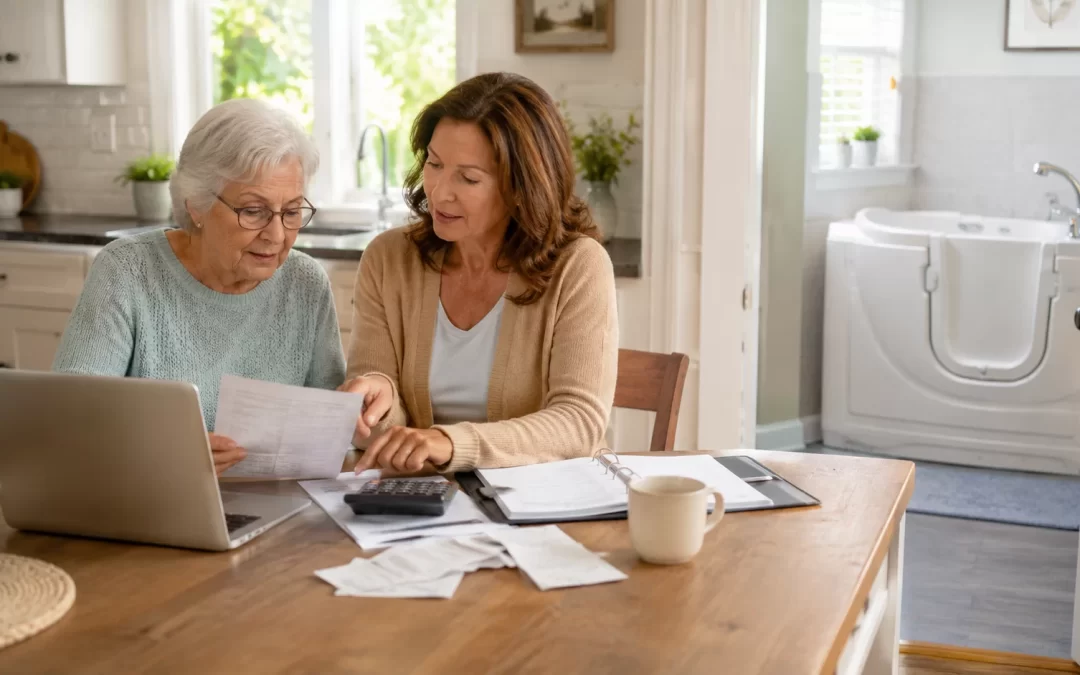
Are walk-in tubs tax deductible? In many cases, a walk-in tub may be tax deductible in the U.S. only if it is considered a medically necessary home modification, not just a comfort upgrade. That usually means it must be prescribed or recommended by a health professional and primarily installed to help with a specific medical condition or disability. Even then, the deduction is typically taken as a medical expense and must meet IRS rules and income thresholds. Because everyone’s situation is different, it’s important to confirm details with a qualified tax professional before assuming any tax benefit.
For many homeowners, seniors, and caregivers, the cost of a walk-in tub is a major concern, and potential tax deductions can be part of the decision. This guide explains how tax rules generally treat walk-in bathtubs, what “medically necessary” means in practice, and what documentation you may need. It also covers other ways to manage costs, alternatives to consider, and how to decide whether a walk-in tub is the right fit for your home and budget.
Table of Contents
- Are Walk-In Tubs Tax Deductible?
- How Medical Expense Deductions Work for Home Modifications
- When a Walk-In Tub May Qualify as “Medically Necessary”
- When a Walk-In Tub May NOT Be Tax Deductible
- Numbers, Costs, and What Affects Them
- Other Ways to Lower the Cost of a Walk-In Tub
- Is a Walk-In Tub the Right Choice for You?
- Questions to Ask Before Getting a Quote
- Frequently Asked Questions
- Summary: Key Takeaways
- What to Do Next
Are Walk-In Tubs Tax Deductible?
In the U.S., walk-in tubs are not automatically tax deductible. The IRS generally treats them as personal home improvements unless they are installed primarily for medical care and meet specific criteria.
In many situations, a walk-in tub may be treated as a medical expense if:
- It is recommended or prescribed by a licensed health professional (such as a doctor or occupational therapist).
- It is installed mainly to help treat, manage, or accommodate a medical condition or disability.
- The cost is not fully reimbursed by insurance or another program.
Even when those conditions are met, the deduction usually falls under the IRS rules for medical expenses, which means:
- You must itemize deductions on your tax return.
- Only the portion of total medical expenses that exceeds a certain percentage of your adjusted gross income (AGI) may be deductible, based on current IRS rules.
- There may be special rules if the improvement also increases your home’s value.
Because tax laws change and every household’s finances are different, it is essential to confirm your specific eligibility with a qualified tax professional or CPA before relying on any potential deduction.
How Medical Expense Deductions Work for Home Modifications
Basic idea of medical expense deductions
The IRS allows taxpayers to deduct certain qualified medical expenses that are not reimbursed by insurance or other sources. These can include costs to diagnose, treat, or ease a medical condition, as well as some home modifications that make living at home safer or more manageable for someone with a disability or health issue.
Walk-in tubs sometimes fall into this category when they are installed to help with:
- Mobility limitations
- Balance issues
- Joint pain or stiffness
- Chronic conditions that make traditional tubs or showers difficult to use
Thresholds and itemizing
Medical expenses are only deductible to the extent they exceed a certain percentage of your adjusted gross income (AGI), and you must choose to itemize deductions instead of taking the standard deduction. The exact percentage and rules can change, so it’s important to check current IRS guidance or speak with a tax professional.
For many households, this means:
- If your medical expenses (including a qualifying walk-in tub) are relatively low compared to your income, you may not see a tax benefit.
- If you already have high medical expenses, adding a medically necessary walk-in tub may help push you over the threshold where some of those costs become deductible.
Capital improvements vs. medical expenses
Some home modifications are considered capital improvements that increase the value of your home. The IRS may treat part of the cost differently if the improvement also raises your property value.
In general terms (not legal or tax advice):
- If a modification is primarily for medical care and does not significantly increase your home’s value, the full cost may be considered a medical expense.
- If it does increase your home’s value, only the portion of the cost that exceeds the value increase may be treated as a medical expense.
Determining this can be complex. A tax professional may suggest getting a before-and-after home valuation or using other documentation to support your claim.
When a Walk-In Tub May Qualify as “Medically Necessary”
Common situations where a walk-in tub may qualify
While every case is unique, a walk-in bathtub is more likely to be considered medically necessary when:
- The user has a diagnosed condition that makes stepping over a standard tub wall unsafe or unrealistic.
- A doctor, physical therapist, or occupational therapist recommends a walk-in tub as part of a care plan.
- The main goal is safe, manageable bathing at home, not luxury or spa-like features.
Examples of real-world scenarios include:
- An older adult with severe arthritis who struggles to lift their legs over a traditional tub.
- Someone recovering from hip or knee surgery who needs a seated, low-step bathing option.
- A person with balance issues or a neurological condition who needs a stable, seated bathing environment.
Documentation that may help support a deduction
Again, only a tax professional can tell you what is required in your situation, but homeowners often find it helpful to keep:
- A written recommendation or prescription from a doctor or therapist.
- Notes or reports from an occupational therapy home assessment, if available.
- Detailed invoices from the walk-in tub company and installer, clearly showing labor and materials.
- Photos or descriptions of the bathroom before and after installation.
Good documentation can help show that the walk-in tub was installed for medical reasons, not just for comfort or aesthetics.
Features that support a medical-use argument
Some walk-in tub features are clearly focused on accessibility and safety, such as:
- Low step-in threshold
- Built-in, chair-height seat
- Grab bars and non-slip flooring
- Easy-to-reach controls and handheld shower wand
- Wide door for easier transfers
Other features, like hydrotherapy jets or chromotherapy lights, may be viewed more as comfort or luxury upgrades. A tax professional can help you understand whether any portion of the cost related to these features is likely to be deductible.
When a Walk-In Tub May NOT Be Tax Deductible
Situations where a deduction is unlikely
Many walk-in tubs are installed for comfort, convenience, or future planning rather than immediate medical need. In these cases, the IRS is more likely to treat the tub as a personal home improvement, not a medical expense.
A deduction may be less likely when:
- There is no specific medical diagnosis or documented mobility issue.
- No doctor or therapist has recommended the tub.
- The main motivation is luxury, spa features, or increasing home value.
- You are installing the tub “just in case” for aging in place, without a current medical need.
Common misunderstandings
Some homeowners assume that any product marketed to seniors or labeled as “accessible” is automatically tax deductible. That is not the case.
Key points to remember:
- Marketing language does not determine tax treatment; IRS rules do.
- Being a senior, by itself, does not make a walk-in tub deductible.
- Even if a neighbor or friend received a deduction, your situation may be different.
Why you should not rely on installer claims
Some sales materials or representatives may suggest that a walk-in tub “may be tax deductible.” While that can be true in some cases, installers are not tax advisors.
Before making a purchase decision based on potential tax savings, it is wise to:
- Ask the installer for itemized pricing and clear contracts, but not tax advice.
- Take those numbers to a CPA or tax preparer to discuss your specific situation.
- Make sure the tub still makes sense for your needs and budget even if you receive no tax benefit.
Numbers, Costs, and What Affects Them
Typical walk-in tub and installation costs
Understanding the real cost of a walk-in tub can help you decide whether a potential tax deduction would make a meaningful difference.
- Tub only: Many walk-in tubs cost around $3,000–$10,000+ for the unit itself, depending on size, brand, and features.
- Installed cost: With professional installation, total costs often range from about $5,000–$20,000+.
- Basic soaker models (no jets) are usually at the lower end of the range.
- Hydrotherapy or luxury models with water jets, air jets, heated seats, or fast-drain systems tend to be more expensive.
Installation time can vary:
- Straightforward replacements may take about 1–3 days.
- More complex projects that involve moving plumbing, widening doors, or major remodeling can take longer and cost more.
For a deeper breakdown of pricing, you can review a detailed guide such as How Much Does a Walk-In Tub Cost? A Realistic Pricing Guide.
What affects the total cost
Several factors influence what you will actually pay:
- Bathroom layout: Tight spaces, narrow doors, or unusual layouts can increase labor costs.
- Plumbing and electrical: Older homes may need upgrades to handle new fixtures or electrical components.
- Type of tub: Standard walk-in soakers cost less than wheelchair-accessible or bariatric models.
- Features: Hydrotherapy jets, air jets, heated surfaces, and quick-drain systems all add to the price.
- Location: Labor rates and permit costs vary by region.
Because of these variables, two homeowners can pay very different amounts for what seems like a similar walk-in bathtub.
How a tax deduction might affect your net cost
If your walk-in tub qualifies as a medical expense and you are able to deduct part of the cost, the actual impact depends on:
- Your total medical expenses for the year.
- Your adjusted gross income (AGI).
- Your tax bracket and whether you itemize deductions.
For example, if you spend $10,000 on a medically necessary walk-in tub and other medical expenses, and a portion of that becomes deductible, the tax savings might reduce your net cost by a few hundred to a few thousand dollars. Only a tax professional who knows your full financial picture can estimate this accurately.
It is wise to view any potential tax deduction as a possible bonus, not the main reason to purchase a walk-in tub.
Other Ways to Lower the Cost of a Walk-In Tub
Insurance and benefit programs
Some homeowners ask whether Medicare, Medicaid, VA benefits, or private insurance will pay for a walk-in tub. Coverage varies widely and often depends on:
- Your specific plan or program.
- Medical necessity and documentation.
- Whether the tub is considered durable medical equipment or a home modification.
Many standard Medicare plans do not cover walk-in tubs, but there can be exceptions or related benefits under certain programs. Because rules are complex and change over time, it is important to contact your insurance provider, local Medicaid office, or VA representative directly to ask about your situation.
Local grants and assistance
In some areas, there may be local or state programs that help with home accessibility improvements, especially for:
- Veterans
- People with disabilities
- Low-income seniors
These programs might offer grants, low-interest loans, or other assistance for bathroom safety upgrades. Your local Area Agency on Aging, disability services office, or housing authority can be a good starting point for information.
Choosing cost-effective options
If you are paying out of pocket, you can often reduce costs by:
- Selecting a basic soaker walk-in tub instead of a fully loaded luxury model.
- Keeping the tub in the same location as your existing tub or shower to minimize plumbing changes.
- Comparing quotes from multiple installers to find fair pricing and avoid overpaying.
- Asking about promotions, discounts, or package deals that still meet your needs.
Sometimes, a simpler walk-in tub with essential safety features is more budget-friendly and easier to justify, with or without any tax benefit.
Is a Walk-In Tub the Right Choice for You?
When a walk-in tub may be a good fit
A walk-in bathtub can be a strong option if:
- You or a loved one has difficulty stepping over a standard tub wall.
- Standing for long periods in a shower is tiring or uncomfortable.
- You prefer soaking baths but need a safer, seated way to get in and out.
- You want to support aging in place and maintain bathing independence as long as possible.
Common safety and comfort features that appeal to many seniors and caregivers include:
- Low step-in threshold
- Built-in seat
- Grab bars and non-slip floor
- Handheld shower wand
- Easy-to-reach controls
When a walk-in tub may not be the best fit
A walk-in tub may not be ideal if:
- The user cannot sit comfortably or safely in a seated position for the time it takes to fill and drain the tub.
- Transfers in and out of the built-in seat are difficult, even with grab bars.
- The bathroom is too small to accommodate the tub without major remodeling.
- Your budget is very limited, and smaller safety upgrades would address the most urgent concerns.
In these cases, a walk-in shower with a low or no threshold, grab bars, and a shower chair may be a better fit.
Alternatives and smaller safety upgrades
If a full walk-in tub is not right for you, consider:
- Installing grab bars near the tub or shower and toilet.
- Adding a non-slip mat or non-slip coating to the tub or shower floor.
- Using a shower chair or bench for seated bathing.
- Replacing a high-sided tub with a low-threshold shower.
- Improving lighting and reducing clutter in the bathroom.
These changes are often more affordable and can still make bathing easier and more manageable, even if they are not tax deductible.
Questions to Ask Before Getting a Quote
Information to gather ahead of time
Before you contact walk-in tub companies or installers, it helps to have:
- Basic measurements of your bathroom and existing tub or shower.
- Photos of the current setup.
- A clear idea of who will use the tub and what their mobility needs are.
- A rough budget range you are comfortable with.
- Any notes or recommendations from a doctor or therapist, if applicable.
Questions to ask installers
When you speak with potential installers, consider asking:
- What models do you recommend for my specific needs and bathroom layout?
- What is the total estimated cost, including the tub, installation, permits, and any electrical or plumbing work?
- How long will installation take, and will I be without a bathroom during that time?
- What warranties are included for the tub and for the installation work?
- Can you provide references or reviews from past customers?
- Will you give me an itemized written quote and contract?
Remember that installers should not give tax advice. Instead, ask them for clear pricing and documentation you can share with your tax professional.
Red flags to watch for
Be cautious if you encounter:
- High-pressure sales tactics or “today only” pricing.
- Vague or verbal-only quotes with no written breakdown.
- Unwillingness to answer questions about permits, licensing, or insurance.
- Promises that the tub will “definitely” be tax deductible or fully covered by insurance.
Taking time to compare multiple quotes and read contracts carefully can help you avoid costly mistakes.
Frequently Asked Questions
Are walk-in tubs tax deductible for seniors?
Walk-in tubs are not automatically tax deductible just because the user is a senior. They may be deductible as a medical expense only if they are installed primarily for medical reasons, meet IRS rules, and you itemize deductions. A tax professional can review your specific situation and advise you.
Do I need a doctor’s note to deduct a walk-in tub?
A written recommendation or prescription from a doctor or therapist is often helpful in showing that a walk-in tub is medically necessary. While the IRS does not publish a simple checklist for every situation, strong documentation can support your case if you claim the cost as a medical expense. Always confirm requirements with a tax advisor.
Can I deduct the full cost of a walk-in tub?
In some cases, the full cost may be treated as a medical expense if the tub is primarily for medical care and does not significantly increase your home’s value. If it does increase your home’s value, only part of the cost may qualify. In all cases, medical expenses are subject to IRS thresholds and itemizing rules, so a tax professional should review your numbers.
Are luxury features like jets and heated seats tax deductible?
Features such as hydrotherapy jets or heated seats may be viewed as comfort or luxury upgrades rather than strictly medical necessities. A tax professional may suggest that only the portion of the cost directly related to medical need is likely to be deductible. Clear, itemized pricing can help them make that determination.
Will Medicare or Medicaid pay for a walk-in tub?
Many standard Medicare plans do not cover walk-in tubs, but there can be exceptions or related benefits under certain programs or supplemental plans. Medicaid and other assistance programs vary by state and individual eligibility. To get an accurate answer, contact your specific plan or local agency directly.
Should I buy a walk-in tub if I’m not sure it will be tax deductible?
It is wise to choose a walk-in tub based on safety, comfort, and budget first, and treat any potential tax deduction as a bonus. If a deduction is important to your decision, speak with a tax professional before you buy. That way, you can make a confident choice based on realistic expectations.
Summary: Key Takeaways
- Walk-in tubs can sometimes be tax deductible in the U.S., but only when they qualify as medically necessary home modifications under IRS rules.
- To claim a deduction, you generally must itemize, meet medical expense thresholds, and have strong documentation, often including a doctor’s recommendation.
- Typical installed walk-in tub costs range from about $5,000–$20,000+, depending on the model, features, and bathroom conditions.
- Even if you receive no tax benefit, a walk-in tub or alternative upgrades may still be worthwhile for safer, more comfortable bathing at home.
- Before deciding, compare multiple quotes, review your options with a tax professional, and choose the solution that best fits your needs, home, and budget.
What to Do Next
The right walk-in tub depends on your bathroom layout, mobility needs, comfort preferences, and budget—not just potential tax deductions. Comparing quotes from reputable installers can help you understand your real costs and options without committing to a high-pressure sales appointment. Start by requesting a personalized walk-in tub quote here: get your walk-in tub quote.